challenge
Singapore's Health Promotion Board knew that healthy habits formed in primary school weaken through secondary school and that youth mental wellbeing support was not being used early or consistently. It did not know why. A knowledge gap, a motivation gap, peer influence, screen time, and parents stepping back too soon: each explanation had advocates inside HPB, each pointed to a different intervention, and none had been tested against how a young person actually spends a day. Two studies were commissioned. One followed eating, sleep, exercise, family bonding, screen use and oral health across the secondary school transitions. The other followed stress, coping and resilience from the mid-teen years into early adulthood through further study, national service and work. The brief in both cases was not a report. It was a direction HPB could pilot, with enough behavioural evidence behind it to hold up across policy, programme and digital teams.
Client
HPB
Format
Platform
ACTION
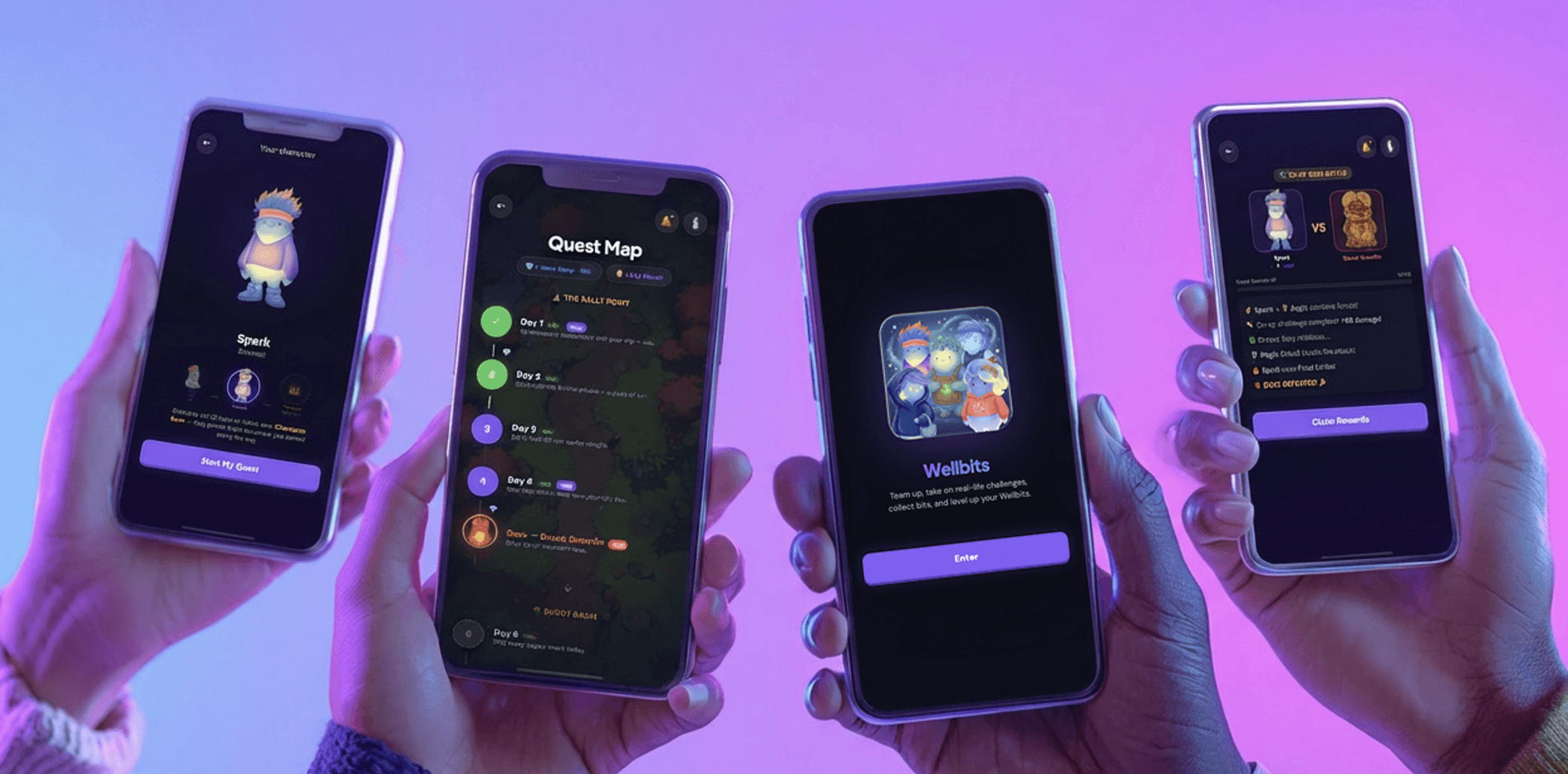
I led the research, behavioural framing, design strategy and concept direction for both studies, from discovery through co-creation to two rounds of validation with youth and parents. Behaviour as the Starting Point I refused the framing that this was an awareness problem. The six habit domains had been organised as separate programmes, but youth live them in one day, governed by the same timetable, homework load, phone and household, so the research treated them as a single connected set. COM-B separated what youth could not do from what their environment did not allow, and it kept killing the knowledge hypothesis. Rather than segmenting youth into types, we mapped where in a day and where in a school career, the behaviour becomes hard. Naming the Drift and the Spiral Habits do not collapse. They drift, and they drift when adult structure thins before the young person has built any of their own. Three school transitions concentrate that handover, and two daily windows carry most of the loss: after school and late at night. Health loses every contest with what feels urgent now. The stress study found a matching loop. With no clear next step, stress turns inward, advice starts to feel like effort, and youth take the fastest relief available. Read together, drift and the spiral feed each other, and both trace back to the same cause: influence and autonomy handed over faster than a young person can absorb. Designing for Restart, Not Streaks The insights ruled out an education layer, long-term benefit framing, and any fixed programme with an end. What replaced them: anchor support to the drift windows rather than the topic, tie every action to something felt within a day, and keep the next step small and self-chosen, scaled by stage. Most consequentially, design the restart. A missed day is normal, so youth can repeat, shrink, swap or skip without it reading as failure. For stress, relief comes before reflection, entry is by situation rather than emotion, and youth decide what stays private. Parents were given a different role: understand before advising, try one small response and guide rather than carry.
RESULTS
- A behavioural account of habit decline that replaced the knowledge hypothesis with a structure-and-handover one, agreed across policy, programme and digital teams - Three transition points and two daily windows, giving HPB a shared answer to where support belongs rather than what it should say - Coping modes and a support sequence covering prevention, relief, recovery and return - One set of design principles applied consistently across youth-facing and adult-facing experiences, usable by content and product teams without reading the research - Four concept directions taken through two validation rounds to pilot readiness - A pilot designed to measure real-life behaviour rather than app interest: return after a missed day, repeat use at seven, fourteen and thirty days, whether a parent tried one different response at home - An integrated view across both studies, now the basis for treating youth habits and youth mental wellbeing as one journey rather than two programmes
LEADERSHIP LENS
We changed what HPB was designing for: not what youth know, but the point at which their support runs out. Clarity. One behavioural question held across two studies, two audiences and six domains, so separate teams inherited a shared problem instead of separate briefs. Cadence. Research fed a define workshop before anyone drew a screen, and two validation rounds were built in from the start, so findings could change the design rather than justify it. Care. Youth are treated as people managing a genuinely crowded day, not a compliance problem. Parents were treated as people whose methods had aged out, not as obstacles.