challenge
Redesign the Shanghai workplace for AKQA, consolidating three separate teams scattered across two floors into a single, cohesive 1,400 m² studio. The brief had to resolve competing tensions: Unite the teams physically while preserving each group's operational independence and identity. Create a space that embodied AKQA's creative culture—open, collaborative, non-hierarchical—without defaulting to the tech-startup clichés of the era. Make transparency a spatial principle, not just a value on a wall. Deliver a workplace where chance encounters and social rituals could drive the informal exchange that creative agencies depend on. → The real brief wasn't a floor plan. It was to design the conditions for creative culture—visibility, autonomy, and belonging—into the architecture itself.
Client
AKQA Shanghai
Format
Brand
ACTION
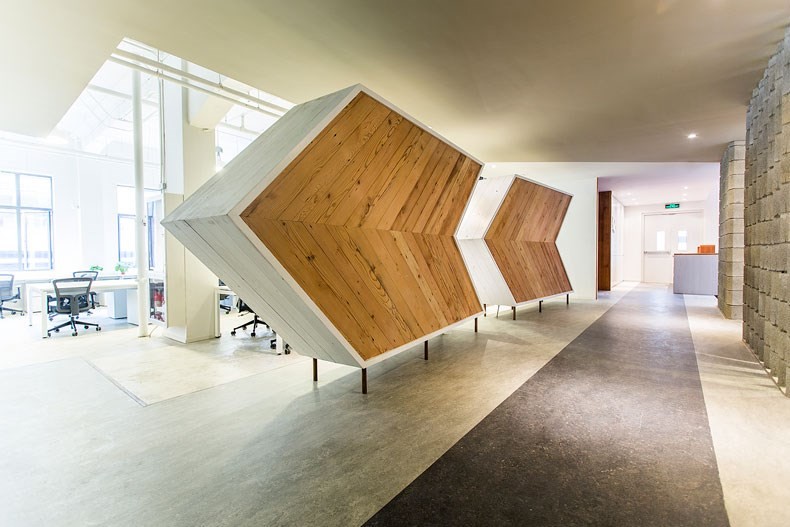
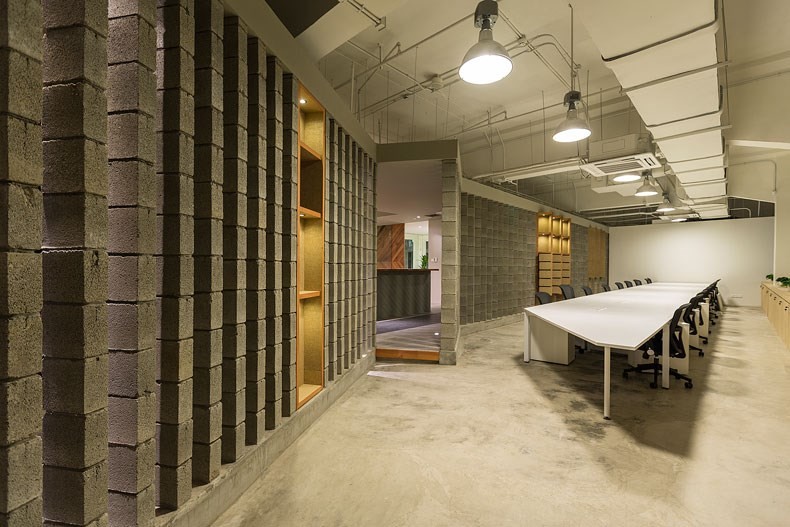
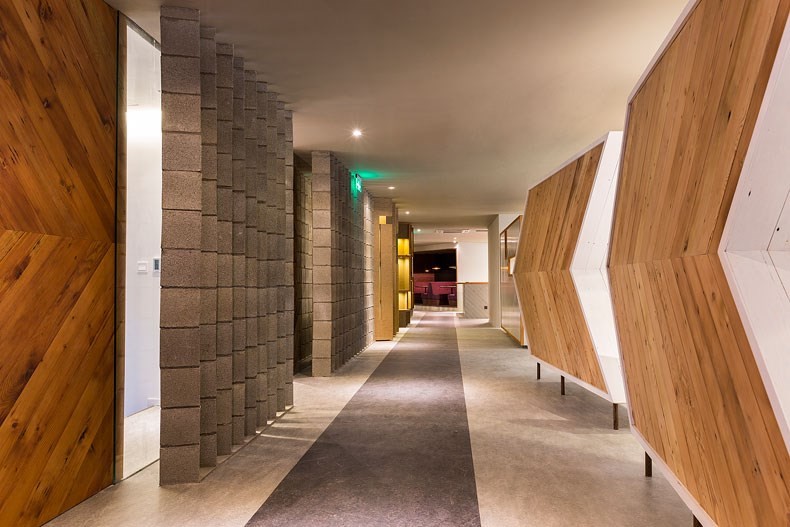
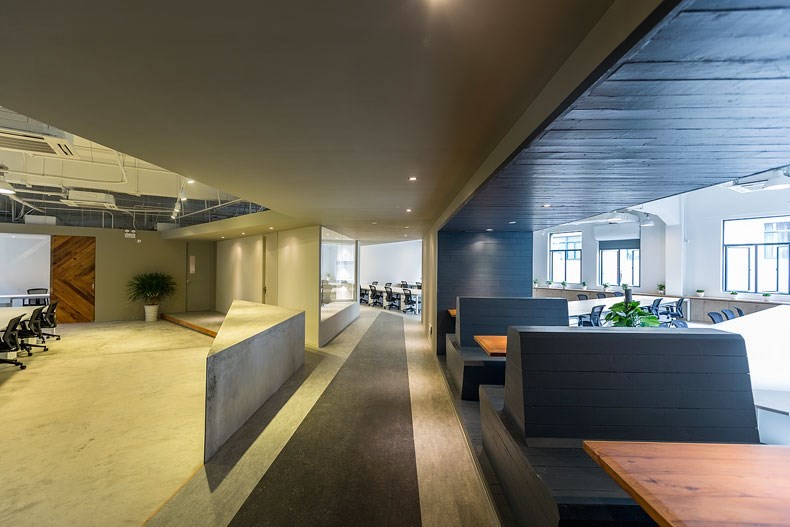
I led the experience and interior design vision, working in close partnership with A00 Architecture to translate cultural intent into spatial decisions. Every choice; material, elevation, circulation, was designed to make AKQA's values physically legible. The Desk as Public Architecture Reduced the entire 1,400 m² studio to just three enclosed rooms—glass-walled independent offices for each team lead. Every other space was open. The intent was radical: in a culture that defaulted to corner offices and closed doors, this was a deliberate inversion. "Seeing and being seen" became the spatial thesis—leadership visible to the studio, the studio visible to leadership. Glass enclosures meant that even the few private spaces participated in the openness. Designed a transparent public corridor running through the studio, clad in raw mud bricks, a material drawn from traditional Chinese construction, grounding a digital agency in something tactile and local. The corridor floor was raised and paved in amber-toned material, sitting visibly higher than the surrounding mud-brick floor. This elevation shift did something subtle but deliberate: it signaled that walking through the corridor was a public act: a moment of crossing through the studio's shared space, while the lower office floors were territory. No signage, no barriers. Just a change in material and height that the body understood instinctively. Organized the studio in a U-shaped layout, wrapping three team zones around a central kitchen and café. The kitchen wasn't an afterthought or a utility corner; it was designed to the standard of a professional coffee shop, with proper equipment, countertops, and seating. It became the social heart of the studio: the place where cross-team conversations happened naturally, where Friday events landed, where clients were hosted casually. By placing it at the center of the U, every team had equal access and equal ownership. The café was architecture doing the work of management—breaking silos without forcing collaboration. Maintained a restrained material palette— brick, amber stone, raw surfaces—that gave the space weight and texture against the screens and whiteboards of a digital studio. The choices were deliberate counterpoints: handmade against digital, local against global, permanent against the fast-turnover nature of agency work. The effect was a studio that felt grounded and intentional, not disposable.
RESULTS
Three teams, previously fragmented across two floors, unified into a single studio with measurable improvements in cross-team collaboration and informal knowledge sharing. A 1,400 m² open studio with only three private rooms—a ratio that challenged industry norms for agency workplaces in Shanghai at the time. The café became AKQA Shanghai's primary social and client-hosting space, replacing formal meeting rooms for most interactions. The transparency principle influenced how the teams worked: visible leadership, accessible decision-making, a culture of openness reinforced by the space itself. The design demonstrated that workplace experience could be shaped through architectural decisions—elevation, material, circulation—rather than furniture, signage, or policy. Proof that spatial design can encode culture—that how a team sees each other shapes how they work together.
LEADERSHIP LENS
This project deepened a conviction I'd first tested with URBN Hotels: that design's most powerful tool is orchestration across disciplines. My role sat between architecture and culture—translating what AKQA valued into decisions about brick, glass, and elevation. Clarity – Distilled a complex brief (three teams, two floors, competing identities) into a single spatial thesis: transparency as culture made visible. Cadence – Partnered with A00 Architecture across a process that moved between strategic intent and material reality—ensuring the experience concept survived into construction. Care – Respected each team's need for autonomy while designing the conditions for connection. The U-shape, the café, the glass offices—each was a negotiation between independence and togetherness, resolved through design rather than mandate. AKQA Shanghai was where I learned that workplace design isn't about desks and meeting rooms. It's about designing the social contract of a team into the walls, floors, and sightlines they inhabit every day.